


Table of Content
Scottish hats come in several distinctive styles, from traditional Highland bonnets such as the Tam o’ Shanter, Glengarry, and Balmoral to everyday caps like the flat cap or bunnet. There isn’t one single name for a Scottish hat—the right term depends on its shape, history, and how it is traditionally worn.
In this guide, you’ll discover the main types of Scottish hats, their names and defining features, the traditions behind them, and how to choose the right style for different occasions.
Scottish Hat Names & Types at a Glance
Scottish headwear includes several distinct styles rather than one single “Scottish hat.” Traditional forms are often described as Scottish bonnets, while an everyday flat cap may also be called a bunnet in Scotland. The table below quickly matches each name to its shape and traditional use.
Scottish Hat |
Also Known As |
How to Recognize It |
Traditional Association |
Tam o’ Shanter |
Tam |
A soft, round wool or tweed bonnet with a broad crown and a central toorie |
Scottish heritage, casual wear, and military history |
Glengarry Bonnet |
Glengarry |
A folded, boat-shaped cap with a creased crown, rear ribbons, and often a diced band |
Scottish regiments, pipe bands, and formal Highland dress |
Balmoral Bonnet |
Balmoral |
A round, flat-topped wool bonnet with a toorie and ribbon detailing |
Traditional Highland dress and military wear |
Kilmarnock Bonnet |
Kilmarnock |
A heavier traditional wool bonnet that predates several later Scottish bonnet styles |
Historic Scottish and military headwear |
Feather Bonnet |
Piper’s Bonnet |
A tall, dramatic bonnet covered with feathers |
Ceremonial military dress and pipe bands |
Scots Blue Bonnet |
Blue Bonnet / Jacobite Bonnet |
A broad wool bonnet traditionally associated with blue coloring |
Historic Highland and Jacobite-era dress |
Flat Cap |
Bunnet / Driving Cap |
A close-fitting rounded cap with a short front brim, often made from wool or tweed |
Everyday and country wear |
Harris Tweed Cap |
Tweed Flat Cap |
A flat-cap style made from Harris Tweed or similar heritage wool fabrics |
Modern Scottish country and casual wear |
Deerstalker |
Hunting Cap |
Front and rear brims with earflaps tied above or below the head |
Scottish countryside and outdoor wear |
Scottish Snood |
Snood / Head Wrap |
A fabric or knitted head covering rather than a structured cap |
Historical and practical headwear |
Some of these styles belong more closely to traditional Highland or military dress, while others are better understood as everyday or country headwear. The next sections examine these two groups separately.
Traditional Scottish Hats and Highland Bonnets
Traditional Scottish bonnets developed alongside Highland dress, military uniforms, and everyday wool headwear. Although their shapes and uses differ, many share familiar details such as a soft wool construction, a toorie on the crown, ribbons, diced bands, or a place for a clan or regimental badge.
The following styles are among the most recognizable bonnets connected with Scottish Highland and military tradition.

Tam o' Shanter
The Tam o' Shanter, often shortened to Tam, is a soft, round Scottish bonnet with a wide crown and, in many versions, a small woolen toorie at the center. Traditionally made from wool, it has a fuller and more relaxed shape than the Balmoral bonnet.
Its name is closely associated with Robert Burns’ famous 1790 poem Tam o’ Shanter, one of the best-known works in Scottish literature. The bonnet later took the name of Burns’ character, helping cement its place in popular Scottish identity.
Over time, versions of the Tam were also incorporated into military dress, while civilian styles remained part of Scottish heritage wear. Today, it is one of the easiest Scottish hats to recognize. It is generally better suited to informal or cultural occasions than highly formal Highland dress.

Glengarry Bonnet
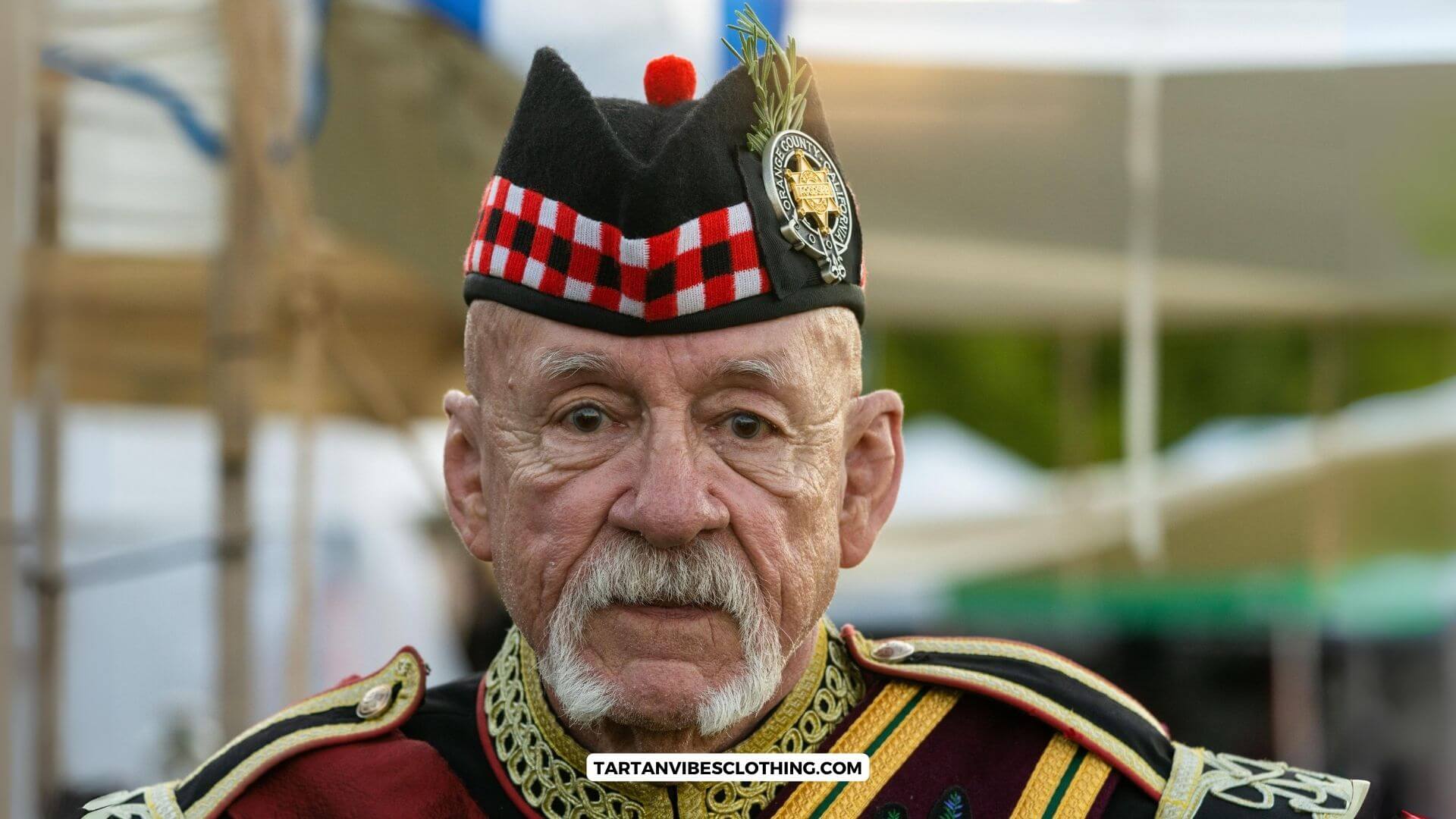
The Glengarry is one of the most distinctive Scottish military bonnets. Unlike the round Tam or Balmoral, it has a narrow, folded shape with a crease along the crown and long ribbons at the back. Many military versions also feature a diced band and a side cap badge.
The Glengarry became strongly associated with Scottish regiments during the 19th century. Period photographs preserved by the National Army Museum show Highland soldiers wearing Glengarries with diced bands and regimental badges, making the bonnet an established part of Scottish military identity.
That military heritage also explains its continued connection with pipe bands, Highland ceremonies, and formal dress. When worn with a kilt for a wedding, parade, or other formal event, the Glengarry is usually one of the most traditional choices.
Balmoral Bonnet
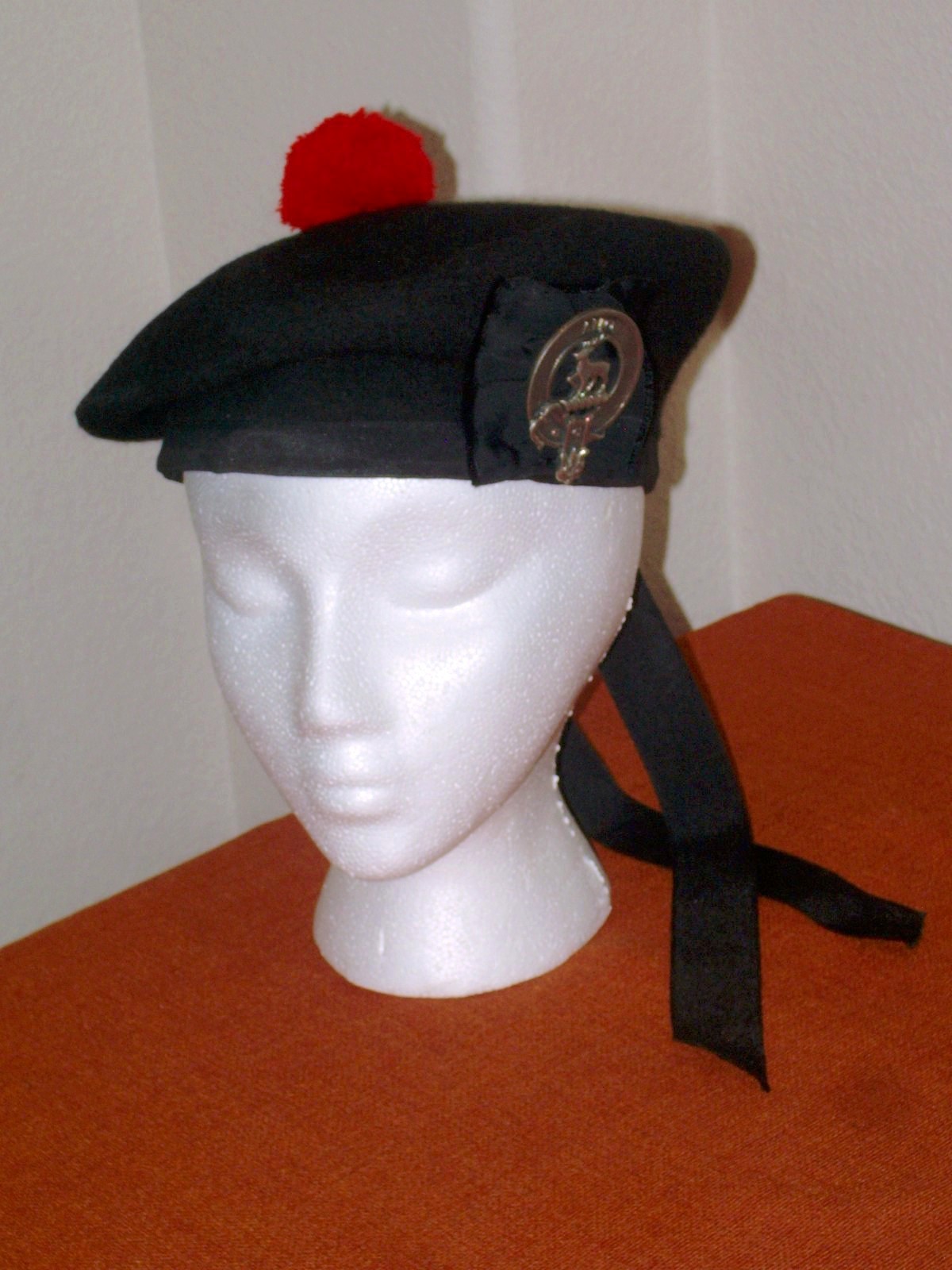
The Balmoral bonnet is a soft, round wool bonnet with a flatter crown than the Tam. Traditional examples may include a toorie, trailing ribbons, and a badge worn on the side, particularly in Highland or military dress.
Its shape belongs to a much older Scottish tradition of round knitted and felted wool bonnets. Surviving examples held by National Museums Scotland show that similar blue wool bonnets were already being worn in Scotland in the early 18th century.
Compared with the Glengarry, the Balmoral has a softer and less structured appearance. It nevertheless works naturally with Highland dress and has long associations with Scottish military and ceremonial clothing.
Kilmarnock Bonnet
The Kilmarnock bonnet is an older style of knitted or felted Scottish wool bonnet closely connected with the development of later military headwear. It typically has a rounded crown and simple construction, reflecting Scotland’s long tradition of producing practical wool bonnets.
Rather than treating the Kilmarnock as an entirely separate modern style, it is more useful to understand it as part of the evolution of Scottish bonnet design. Its form influenced later Highland and military styles, including bonnets that became more standardized through regimental dress.
Feather Bonnet
The Feather Bonnet is a tall ceremonial headdress covered with feathers, making it dramatically different from softer everyday bonnets such as the Tam or Balmoral.
It became especially associated with Highland regiments and military bands during the 19th century. Historical photographs in the National Army Museum show Highland soldiers, bandsmen, and drum majors wearing black feather bonnets with plumes, diced bands, and regimental insignia.
Today, the Feather Bonnet is best understood as ceremonial military headwear, particularly associated with pipe bands and full Highland dress, rather than an everyday Scottish hat.

Scots Blue Bonnet / Jacobite Bonnet
The Scots Blue Bonnet was a broad wool bonnet traditionally dyed blue and worn in Scotland well before many later Highland hat styles became standardized. Archaeological and museum collections include early Scottish bonnets whose wool still shows evidence of indigo dye, illustrating how established the blue bonnet tradition was by the early 1700s.
Blue bonnets also became visually associated with Highland dress during the Jacobite period. However, the term “Jacobite bonnet” is best treated as a historical or modern heritage label rather than the name of one precisely standardized hat style.
Its significance lies in the broader history of Scottish dress: simple wool headwear gradually became intertwined with Highland identity, military symbolism, and later romantic interpretations of Scotland.

Everyday Scottish Caps and Country Headwear
Not all headwear associated with Scotland belongs to formal Highland dress. Everyday Scottish style also includes practical flat caps, tweed caps, and country headwear shaped by climate, outdoor life, and Scotland’s long relationship with wool textiles.
These styles are generally more casual than traditional bonnets such as the Glengarry or Balmoral. They are easier to incorporate into modern everyday wear.
Flat Cap / Bunnet
The flat cap is one of the most familiar forms of everyday Scottish headwear. In Scotland, it may also be called a bunnet—a Scots term commonly used for this close-fitting cap with a rounded crown and short front brim.
Traditionally made from durable wool or tweed, flat caps became practical headwear for work, travel, farming, and time outdoors. Their simple construction offered warmth without the bulk of a larger bonnet, helping the style become closely associated with British and Scottish country clothing. To explore how this style compares with other classic designs, see our guide to the different types of flat caps.
Today, the bunnet remains an easy way to add a Scottish-inspired touch to an outfit. It works especially well with knitwear, wool coats, tartan accessories, and other casual heritage pieces without requiring full Highland dress.


Harris Tweed Cap
A Harris Tweed cap usually takes the familiar form of a flat cap. Still, it draws much of its Scottish identity from the cloth itself.
Authentic Harris Tweed® is legally protected under the Harris Tweed Act 1993. According to the Harris Tweed Authority, islanders must handweave the cloth in their homes in the Outer Hebrides, finish it there, and make it from pure virgin wool dyed and spun in the islands.
Made into a cap, the cloth combines traditional Scottish textile craftsmanship with an everyday country style. Its textured wool construction also makes it particularly suited to cool-weather outfits, from casual jackets and knitwear to more polished heritage looks.

Deerstalker
The deerstalker is a practical country cap designed for outdoor wear, recognizable by its front and rear peaks and earflaps that can be tied above the crown or lowered for extra protection.
It is often associated with Scotland because of its strong connection with country estates, stalking, hunting, and outdoor life in the Highlands. However, it is better described as British country headwear with a particularly strong Scottish cultural association rather than a uniquely Scottish national hat.
The deerstalker is also famously linked with fictional detective Sherlock Holmes. However, that popular image comes largely from later illustrations and adaptations rather than from one definitive description in Arthur Conan Doyle’s stories.
For modern wear, it remains a niche choice compared with a flat cap. Still, its distinctive silhouette immediately evokes traditional country clothing.

Scottish Snood
A snood is a soft covering used to hold, cover, or gather the hair rather than a structured cap. Depending on the period and design, it may take the form of a fabric covering, knitted piece, or decorative hair net.
Unlike the Tam o’ Shanter, Glengarry, or Balmoral, the snood is not uniquely Scottish. It should not be treated as a national Scottish hat. Similar forms of hair covering have appeared in British and European dress across different periods.
Its place in a guide to Scottish headwear is therefore better understood through historical and practical dress rather than Highland military tradition. It adds useful context to the broader range of ways people have covered and protected the head beyond Scotland’s better-known bonnets and caps.

A Brief History of Scottish Headwear

Early Scottish Wool Bonnets
Soft knitted wool bonnets were already well established in Scotland by the early 18th century. Surviving examples held by National Museums Scotland show broad, felted wool bonnets dyed in dark blue, reflecting a long tradition of practical wool headwear.
These early bonnets were simple in construction, but their rounded shapes laid the foundation for later styles such as the Kilmarnock, Balmoral, and Tam o’ Shanter. Over time, functional headwear developed stronger regional and cultural associations.
From Everyday Bonnet to Highland and Military Dress
During the 18th and 19th centuries, Scottish bonnets became increasingly connected with Highland dress and military identity.
Earlier soft wool forms gradually evolved into more distinctive shapes as regimental dress became more standardized. Styles such as the Glengarry developed a more structured silhouette, while other bonnets retained the softer, rounded forms rooted in older Scottish headwear.
Military use helped make these styles more widely recognizable beyond their original regional context. By the 19th century, Scottish headwear had become an important visual part of Highland regimental dress and ceremonial tradition.
Scottish Hats as Cultural Symbols Today
Over time, Scottish hats moved beyond their practical and military origins to become part of a broader image of Scottish heritage and identity.
Traditional bonnets remain closely associated with Highland ceremonies, pipe bands, clan and regimental traditions, Burns celebrations, and formal kilt outfits. At the same time, casual styles such as the bunnet, flat cap, and tweed cap preserve the everyday side of Scottish headwear.
Modern Scottish hats therefore reflect two connected traditions: functional wool clothing shaped by daily life and heritage styles preserved through military, ceremonial, and cultural use.
How to Choose and Wear a Scottish Hat
The right Scottish hat depends mainly on the occasion, level of formality, and the rest of your outfit. Traditional bonnets such as the Glengarry and Balmoral work best with Highland dress, while Tams and flat caps are easier to wear casually.
Occasion or Style |
Best Hat Choice |
How to Wear It |
Formal Highland wedding or ceremony |
Glengarry or Balmoral |
Pair with a kilt and formal Highland outfit; keep badges or regimental details appropriate to the occasion |
Pipe band or military-style event |
Glengarry or Feather Bonnet |
Choose the style required by the band, regiment, or ceremonial uniform |
Burns Night or Scottish cultural event |
Tam o’ Shanter, Balmoral, or Glengarry |
Match the level of formality to the event rather than choosing by tradition alone |
Highland Games or heritage gathering |
Balmoral, Tam o’ Shanter, or Glengarry |
Traditional styles work well, especially when worn with a kilt or other Highland clothing |
Casual Scottish-inspired outfit |
Tam o’ Shanter or Flat Cap / Bunnet |
Wear with knitwear, wool coats, tweed, or subtle tartan accessories |
Everyday or country wear |
Flat Cap / Bunnet or Harris Tweed Cap |
Keep the outfit relaxed and let the wool or tweed texture provide the heritage feel |
Outdoor country style |
Flat Cap or Deerstalker |
Best with practical outerwear rather than formal Highland dress |
As a quick rule of thumb, choose a Glengarry for a more structured, formal look, a Balmoral for softer traditional Highland dress, and a Tam o’ Shanter for a more relaxed style. Wool and tweed are the most natural materials, and the hat should fit securely without feeling tight.
Conclusion
Scottish headwear ranges from traditional Highland bonnets such as the Tam o’ Shanter, Glengarry, and Balmoral to everyday styles like the bunnet and tweed cap. Each reflects a different part of Scotland’s history, from practical wool clothing and military dress to modern heritage style.
Whether you are choosing a hat for formal Highland wear, a cultural event, or everyday use, the best choice depends on tradition, formality, fit, and personal style.
Frequently Asked Questions
What Is the Most Popular Hat in Scotland?
For everyday wear, the flat cap or bunnet is one of the most familiar choices in Scotland, especially in wool or tweed. For traditional Highland dress, styles such as the Balmoral, Glengarry, and Tam o’ Shanter are more culturally distinctive, so there is no single hat that is “most popular” in every setting.
What Is the Pom-Pom on a Scottish Hat Called?
The small pom-pom found on many traditional Scottish bonnets is called a toorie. It is commonly seen on styles such as the Tam o’ Shanter and Balmoral bonnet and may be made from wool in a matching or contrasting color.
Do Glengarry Hats Traditionally Have Feathers?
Not every Glengarry has feathers. A traditional Glengarry is primarily identified by its folded shape, rear ribbons, and often a badge or diced band. Feathers or hackles may be added for particular military, pipe-band, or ceremonial traditions.
Can Women Wear Traditional Scottish Hats?
Yes. Traditional Scottish hats are not limited to men in modern dress. Women can wear Tams, Balmoral-style bonnets, tartan caps, flat caps, and other Scottish-inspired headwear depending on the occasion and personal style.
What Is the Three-Letter Name for a Scottish Cap?
The common three-letter answer is Tam, short for Tam o’ Shanter. The name comes from Robert Burns’ 1790 poem Tam o’ Shanter and later became associated with the familiar round Scottish wool bonnet.

Aimee Li
An author dedicated to exploring the rich history, vibrant culture,... of the Scottish clans. As an avid historian and fashion enthusiast, I have always been fascinated by Scotland's heritage and the timeless elegance of its traditional attire. Join me on this journey through the highlands and lowlands, as we delve into the heart of Scottish legacy together.


