


Scottish Slang Words, Phrases and Insults With Meanings and Real Usage
by Teresa Finn on Sep 08, 2026
Table of Content
Scottish slang is a lively mix of everyday expressions, regional speech, and words rooted in Scots, used to talk about everything from people and weather to food, feelings, and daily life. You’ll hear familiar terms like aye (yes), wee (small), ken (know), and dreich (gloomy weather), alongside phrases and insults that can sound confusing if you’re not used to them.
This guide breaks down common Scottish slang words, phrases, and insults in plain English, with examples and context to show how they’re used. Keep reading to find the expressions you’re most likely to hear across Scotland.
Scottish Slang Words at a Glance
Here’s a quick guide to some of the most common Scottish slang words you may hear in everyday conversation, with simple English meanings and typical contexts.
Scottish Word |
Meaning in Standard English |
Typical Use |
Aye |
Yes |
Everyday agreement or confirmation |
Wee |
Small or little |
Describing size, age, or affection |
Dinnae |
Don’t / do not |
Common Scots form used in everyday speech |
Ken |
Know / understand |
Asking or saying whether someone knows something |
Bairn |
Child / baby |
Talking about children, especially in parts of Scotland |
Blether |
Chat / gossip |
Casual conversation or talking at length |
Braw |
Good / excellent |
Giving praise or describing something positively |
Bonnie |
Pretty / attractive |
Describing a person, place, or thing |
Dreich |
Gloomy, wet, and dreary |
Describing miserable weather |
Drookit |
Soaking wet |
Often used after getting caught in heavy rain |
Baltic |
Freezing cold |
Informal way to describe very cold weather |
Peely-wally |
Pale or unwell-looking |
Describing someone who looks washed out or sickly |
Eejit |
Idiot / foolish person |
Mild insult, often playful depending on tone |
Numptie |
Silly or foolish person |
Light-hearted or mildly insulting description |
Scran |
Food |
Informal word for a meal or something to eat |
Piece |
Sandwich |
Traditional Scots usage, especially in phrases such as “piece and jam” |
Close |
Shared hallway or entrance |
Common term for the entrance or stairwell of a tenement building |
Wheesht |
Be quiet / hush |
Telling someone to stop talking or quiet down |
Some of these are rooted in Scots, while others are informal expressions that vary by region and context. The sections below explain how these words are actually used, along with common phrases, insults, and regional variations.
Common Scottish Slang Words and Meanings
Everyday Scottish Slang
These are some of the words you are most likely to hear in casual conversation.
Word |
Meaning |
Example |
Usage |
Aye |
Yes |
“Aye, I’ll be there.” |
One of the best-known Scottish words, used as a casual way to agree or answer yes. |
Naw |
No |
“Naw, I’ve no seen him today.” |
Informal opposite of aye, especially common in casual speech. |
Wee |
Small or little |
“Let’s stop for a wee break.” |
Used for size, amount, age, or affection. It does not always imply something is literally tiny. |
Dinnae |
Don’t / do not |
“Dinnae worry about it.” |
A common Scots form often heard in phrases such as dinnae ken and dinnae fash. |
Ken |
Know or understand |
“D’you ken what I mean?” |
Common in Scots, especially in eastern and northern Scotland. |
Blether |
Chat, gossip, or talk at length |
“We had a good blether over coffee.” |
Usually friendly and informal, although it can also describe someone talking too much. |
Nae bother |
No problem |
“Thanks for helping.” “Nae bother.” |
A relaxed response meaning “you’re welcome” or “don’t worry about it.” |
Wheesht |
Be quiet / hush |
“Haud yer wheesht for a minute.” |
Used to tell someone to quiet down, either seriously or jokingly depending on tone. |

Scottish Slang for People and Personality
Scottish speech has plenty of colorful words for describing people, from affectionate terms to playful insults.
Word |
Meaning |
Example |
Usage |
Bairn |
Child or baby |
“The bairns are playing outside.” |
A traditional Scots word for a child that is still used in parts of Scotland. |
Wean |
Child |
“She’s got two wee weans.” |
Particularly associated with Glasgow and western Scotland. |
Lass / Lassie |
Girl or young woman |
“She’s a lovely wee lass.” |
An affectionate or traditional term rather than an insult. |
Eejit |
Idiot or foolish person |
“You left your keys again, ya eejit.” |
Usually a mild insult and can sound playful between friends. |
Numptie |
Silly or foolish person |
“What a numptie.” |
Often humorous or mildly insulting rather than seriously aggressive. |
Bampot / Bam |
Foolish, irritating, or chaotic person |
“Ignore him, he’s being a bampot.” |
Informal insult that can range from teasing to more dismissive depending on context. |
Gallus |
Bold, confident, or cheeky |
“He walked in looking pure gallus.” |
Often associated with Glasgow and can be positive or slightly critical depending on tone. |
Crabbit |
Grumpy or bad-tempered |
“She’s a bit crabbit this morning.” |
Used for someone who is irritable or in a bad mood. |
Scottish Slang for Weather and Appearance
Scotland’s weather has inspired some especially memorable vocabulary.
Word |
Meaning |
Example |
Usage |
Dreich |
Gloomy, wet, and dreary |
“It’s a dreich day outside.” |
Commonly used for dull, miserable weather. |
Drookit |
Soaking wet |
“I got absolutely drookit walking home.” |
Used when someone or something has been drenched by rain. |
Baltic |
Freezing cold |
“It’s Baltic out there.” |
Informal exaggeration for very cold weather. |
Peely-wally |
Pale or washed out |
“You’re looking a bit peely-wally.” |
Often used when someone looks pale, tired, or slightly unwell. |
Bonnie |
Pretty, attractive, or lovely |
“That’s a bonnie wee village.” |
Can describe a person, place, child, or object in a warm, positive way. |
Braw |
Good, excellent, or fine |
“That was a braw meal.” |
A positive Scots word used to praise something. |

Scottish Slang for Food, Places and Everyday Life
Some Scottish words make the most sense when you hear them in ordinary day-to-day situations.
Word |
Meaning |
Example |
Usage |
Scran |
Food |
“Let’s get some scran.” |
Informal word for food or a meal. |
Piece |
Sandwich |
“I packed a piece for lunch.” |
Traditional Scots usage, also heard in expressions such as piece and jam. |
Messages |
Groceries or shopping |
“I’m away to get the messages.” |
Traditionally used for everyday errands or groceries. |
Close |
Shared entrance, hallway, or stairwell |
“He lives up that close.” |
Common in Scottish tenement housing, especially in cities such as Glasgow and Edinburgh. |
Keek |
Quick look or peek |
“Have a wee keek at this.” |
Casual Scots word meaning to glance or take a look. |
Shoogle |
Shake or wobble |
“Give the handle a wee shoogle.” |
Used when something needs a small shake or movement. |
Hoachin’ |
Very crowded or full |
“The pub was hoachin’ last night.” |
Often used when a place is packed with people, though it can also mean swarming or full of something. |
These words can vary by region, generation, and context, so not every Scot will use every expression in the same way. That is especially true for words associated with Glasgow, Edinburgh, the North-East, or particular Scots dialects.
Common Scottish Slang Phrases
Scottish slang phrases often make more sense as a whole than when translated word by word. Some are everyday responses, while others express confusion, annoyance, excitement, or humor. Here are several common phrases and their meanings in Standard English.
Scottish Phrase |
Meaning in Standard English |
When It’s Used |
Tone |
Ah dinnae ken |
I don’t know |
When you do not know or understand something |
Neutral / informal |
Nae bother |
No problem / you’re welcome |
Replying to thanks or reassuring someone |
Friendly |
Keep the heid |
Stay calm |
Telling someone not to panic or lose their temper |
Supportive |
Haud yer wheesht |
Be quiet / stop talking |
Asking someone to quiet down |
Playful to direct |
Awa’ an bile yer heid |
Go away / stop talking nonsense |
Showing annoyance or disbelief |
Rude / humorous |
Yer bum’s oot the windae |
You’re talking nonsense |
Strongly disagreeing with what someone has said |
Humorous / dismissive |
Up tae high doh |
Very agitated or worked up |
Describing someone who is stressed, flustered, or overexcited |
Informal |
Gie it a rest |
Give it a rest / stop it |
Telling someone to stop complaining, arguing, or repeating themselves |
Mildly annoyed |
What’s the craic? |
What’s happening? / what’s the news? |
Asking what is going on or starting a casual conversation |
Friendly |
The noo |
Right now / just now |
Referring to the present moment |
Informal / Scots |
Context matters with many of these expressions. “Haud yer wheesht” can sound playful between friends but more abrupt when said angrily, while “awa’ an bile yer heid” is generally stronger and works more like a colorful way of telling someone to go away.
Phrases built from Scots words also become easier to understand once you recognize their individual parts. “Ah dinnae ken,” for example, combines dinnae (“do not”) with ken (“know”), giving the straightforward meaning “I don’t know.”

What does “och aye the noo” mean?
“Och aye the noo” roughly translates as “Oh yes, just now” or “Oh yes, right now,” but the full expression is better known as a stereotype of Scottish speech than as a phrase commonly used in everyday conversation.
It combines och (“oh”), aye (“yes”), and the noo (“right now” or “just now”). These individual elements can appear naturally in Scottish speech. Still, the full phrase has become strongly associated with exaggerated Scottish accents, comedy, and parody.
So, if you are trying to understand how people in Scotland actually speak, phrases such as “nae bother,” “ah dinnae ken,” and “keep the heid” are generally more useful than relying on stereotypical expressions.
Scottish Insults, Swear Words and Curse Words
Scottish insults range from light-hearted teasing between friends to genuinely offensive language. Numpty, eejit, and roaster are often on the milder end, while words such as bawbag and fud are much ruder and depend heavily on tone, relationship, and situation.
It is also useful to separate insults from swear words. An insult describes or attacks a person, while a swear or curse word is profanity that may be used for emphasis, frustration, or anger without necessarily being directed at someone.
Mild and Funny Scottish Insults
Many Scottish insults are colorful enough to sound harsh to outsiders but may be used jokingly among friends.
Scottish Insult |
Meaning |
Typical Tone |
Example |
Numpty |
A silly or foolish person |
Mild / playful |
“You forgot your keys again, ya numpty.” |
Eejit |
An idiot or foolish person |
Mild / playful |
“Don’t be such an eejit.” |
Roaster |
Someone acting foolishly or embarrassingly |
Mild to moderate |
“He’s making a total roaster of himself.” |
Bam / Bampot |
A foolish, irritating, or chaotic person |
Mild to moderate |
“Ignore that bampot.” |
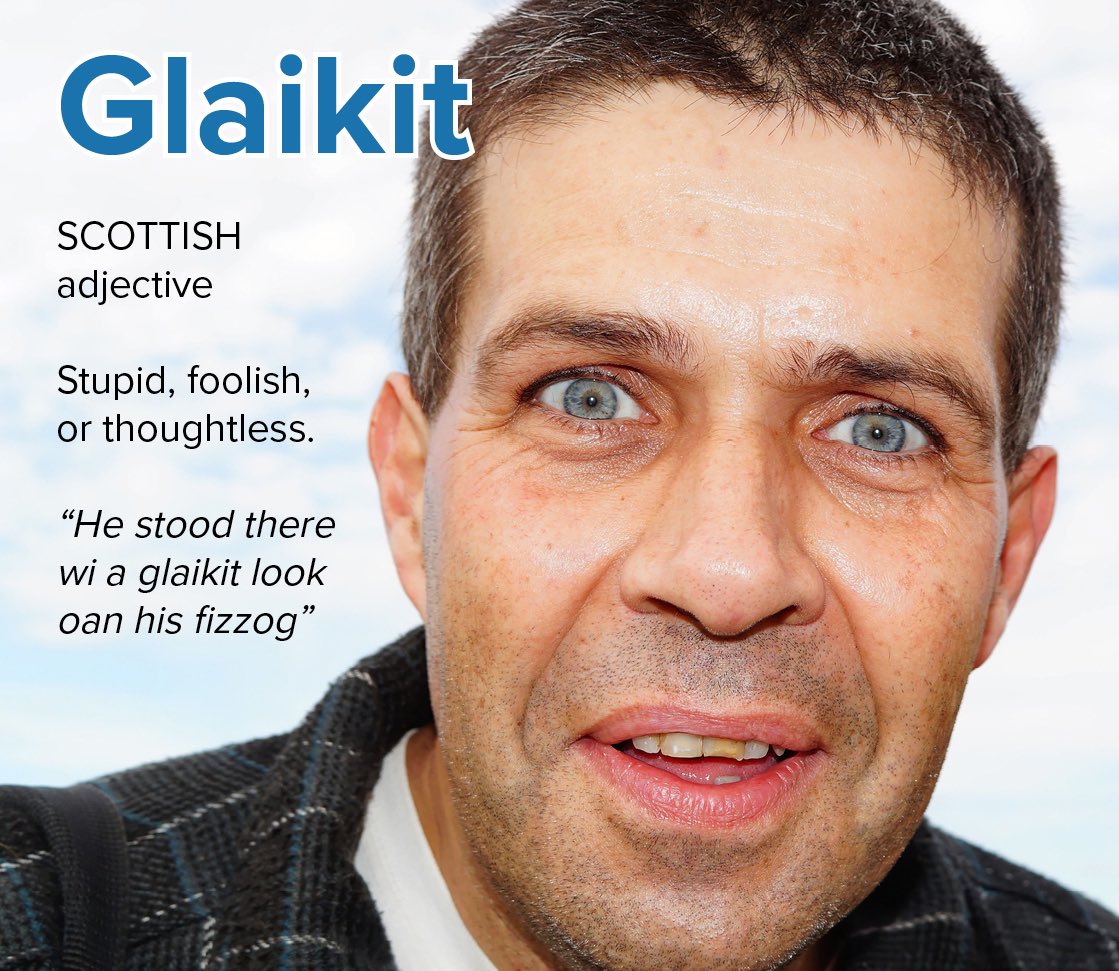
Glaikit |
Foolish, vacant, or clueless-looking |
Mild / teasing |
“What are you standing there looking glaikit for?” |
Tube |
An annoying or foolish person |
Mild to moderate |
“Don’t listen to him, he’s a tube.” |
The same word can feel affectionate in one conversation and insulting in another. Calling a close friend a numpty after a silly mistake, for example, carries a very different tone from saying it angrily to a stranger.
Stronger Scottish Insults
Some terms are noticeably more vulgar and should be used with more caution.
Scottish Insult |
Meaning |
Severity |
Usage Note |
Bawbag |
An obnoxious, foolish, or unpleasant person |
Strong |
Vulgar; sometimes used as banter among friends |
Fud |
A stupid or unpleasant person |
Strong |
Vulgar and more offensive than numpty or eejit |
Walloper |
A useless, irritating, or foolish person |
Moderate to strong |
Can be comic or insulting depending on delivery |
Dobber |
A foolish or objectionable person |
Moderate to strong |
Informal and insulting |
Rocket |
Someone behaving foolishly or wildly |
Moderate |
Often mocking rather than deeply offensive |
Words such as bawbag and fud have vulgar literal associations, so translating them simply as “idiot” can understate their force. Someone may use them jokingly with friends, but that does not make them appropriate in every setting.
Common Scottish Swear Words and Curse Words
Not every swear word heard in Scotland is uniquely Scottish. Scots use many of the same British and English profanity terms heard elsewhere, including bloody, bastard, arse, shite, and stronger forms of swearing. What often makes Scottish swearing distinctive is the way these words are combined with Scots vocabulary, local expressions, and regional speech.
Word or Expression |
General Meaning |
Strength |
Shite |
A Scots/Scottish form of “shit,” used for something bad or as an exclamation |
Strong |
Bloody |
Intensifier expressing annoyance or emphasis |
Mild to moderate |
Arse |
Buttocks; also used to describe an irritating person |
Moderate |
Bastard |
Insult for an unpleasant person |
Strong |
Bawbag |
Vulgar insult for an obnoxious or foolish person |
Strong |
Fud |
Vulgar insult for a foolish or unpleasant person |
Strong |
This distinction is important because searching for Scottish curse words can give the impression that Scotland has an entirely separate set of profanity. In reality, everyday speech often mixes broadly British swear words with distinctly Scots or Scottish expressions.

When Scottish Language Can Be Offensive
People sometimes search for “Scottish slurs,” but most words in lists like this are better described as insults, rude slang, or swear words, not slurs aimed at someone because of their identity.
Whether an expression is offensive usually depends on three things:
The word itself: numpty is far milder than fud or bawbag.
Tone: friendly banter can sound completely different when the same word is shouted angrily.
Relationship and setting: language used between close friends may be inappropriate with strangers, at work, or in formal situations.
If you are learning Scottish slang rather than already familiar with local speech, the safest approach is to understand these terms before trying to use them. Recognizing what someone means is often much easier than judging when a rude expression will actually sound natural.
Scottish Slang Meanings People Often Search For
What Does “Wee Lass” Mean?
“Wee lass” means a little girl or young girl. In Scots, wee means small or little, while lass means girl.
For example: “The wee lass was playing outside.”
The phrase is usually affectionate or descriptive, not insulting. Depending on context, wee can also add warmth or familiarity rather than referring strictly to physical size.
What Does “Fud” Mean in Scottish Slang?
“Fud” is a vulgar Scottish slang word that can be used as an insult for someone seen as foolish, irritating, or unpleasant. The word also has older dialect and anatomical meanings, so its literal sense is cruder than a simple translation such as “idiot” suggests.
For example: “Don’t be a fud.”
Because it is stronger than terms such as numpty or eejit, it is best understood as rude language rather than harmless everyday teasing. Tone and familiarity still matter, especially when the word is used as banter between friends.
What Does “Gommy” Mean?
“Gommy” can mean a foolish or clueless person and is generally used as a mild insult. In Scottish slang, it may suggest someone who looks awkward, confused, or unaware of what is going on.
For example: “Don’t just stand there looking all gommy.”
It sits close in meaning to words such as glaikit, numpty, and eejit, although the exact shade of meaning can vary by speaker and context.
What Does “See You Jimmy” Mean?
“See you, Jimmy” is a stereotypically Scottish expression in which “Jimmy” is used as a generic way of addressing a man. Today, the phrase is strongly associated with Scottish caricature and popular culture, including the well-known tartan “See You Jimmy” hat, rather than being a phrase every Scot regularly uses.
Its tone can vary considerably. Depending on delivery, it may sound humorous, exaggerated, confrontational, or simply like a parody of Scottish speech.
That makes it similar to “och aye the noo” in one important respect: it is widely recognized as Scottish, but recognition does not necessarily mean it is a natural everyday phrase in modern conversation.

What Does “Dinna Fash” Mean?
“Dinna fash” means “don’t worry,” “don’t fret,” or “don’t trouble yourself.” A longer form, “dinna fash yersel,” means “don’t worry yourself.”
The phrase combines:
dinna — don’t / do not
fash — to trouble, bother, or worry
yersel — yourself
It is typically used to reassure someone: “Dinna fash, we’ll sort it out.”
The expression has also become familiar to many international audiences through Outlander, but fash has a much longer history in Scots and is recorded in Scottish sources centuries before the series.
These terms show why direct translation is not always enough with Scottish slang. Meaning often depends on tone, region, and whether a phrase belongs to everyday Scots, modern slang, or a broader Scottish stereotype.
Funny Scottish Slang and Sayings
Scottish humor often comes through in colorful expressions that turn an ordinary comment into something much more memorable. Some are playful slang, while others are traditional or humorous sayings built around exaggeration, vivid imagery, and dry wit.
Scottish Expression |
Meaning in Standard English |
Typical Use |
Ye mak a better door than a windae |
You’re blocking the view |
Said when someone is standing in the way |
Yer heid’s fu’ o’ mince |
You’re talking nonsense / you’re confused |
Teasing someone who is not making much sense |
If patter wis water, you’d droon |
You talk far too much |
Joking about someone who never stops talking |
A’ yer eggs are double-yoakit |
You’re boasting or exaggerating |
Said when someone’s stories sound a little too impressive |
Face like a melted welly |
Looking especially miserable or unattractive |
A cheeky comment about someone’s expression |
Lang may yer lum reek |
May you live long and prosper |
A traditional Scottish good wish |
What’s fur ye’ll no go by ye |
What is meant for you will not pass you by |
Reassuring someone about fate or opportunity |

What makes many of these expressions funny is the imagery behind them. Saying someone “makes a better door than a windae” is a much more colorful way of asking them to move, while “yer heid’s fu’ o’ mince” turns confusion into a playful visual insult.
Not every expression here is technically slang. “Lang may yer lum reek” and “What’s fur ye’ll no go by ye” are better described as traditional Scottish sayings, while expressions such as “yer heid’s fu’ o’ mince” sit closer to humorous everyday speech.
For more traditional expressions, proverbs, and their meanings, explore our full guide to Scottish sayings.
Scottish Slang by Region
Scottish slang and Scots vocabulary can vary noticeably from one part of Scotland to another. Scots is commonly grouped into four main dialect areas: Central, Northern, Southern, and Insular, with further regional varieties within them. Glasgow and Edinburgh fall within Central Scots, while the North-East is associated with Northern Scots and the variety commonly known as Doric.
Region |
Language or Dialect Context |
Examples You May Hear |
Glasgow and the West |
West Central Scots and Scottish English |
wean, gallus, pure, wee |
Edinburgh and the East |
East Central Scots and Scottish English |
ken, bairn, aye, wee |
Aberdeen and the North-East |
Northern Scots / Doric |
fit, fa, loon, quine |
Highlands and Islands |
Northern or Insular Scots in some areas, alongside Scottish Gaelic influence |
aye, wee, bairn, plus locally distinctive Scots or Gaelic vocabulary |
These boundaries are not rigid. People move, expressions spread through media and everyday conversation, and age or social group can matter as much as geography. A word strongly associated with one region may therefore also be understood or used elsewhere in Scotland.

Glasgow Slang
Glasgow is part of the West Central Scots area, and everyday speech in the city often blends Scots vocabulary with Scottish English, along with distinctly Glaswegian pronunciation and phrasing.
Words you may hear include:
Wean — a child
Gallus — bold, confident, or cheeky
Pure — used as an intensifier, similar to “really” or “very”
Wee — small or little
For example, someone might describe a confident person as “pure gallus” or refer to a child as “a wee wean.”
Not every Glaswegian uses the same vocabulary, however, and many words associated with Glasgow are also understood elsewhere in Scotland.
Edinburgh Slang
Edinburgh sits within the broader Central Scots area, but its everyday speech is not identical to Glasgow’s. Scots vocabulary may appear alongside modern Scottish English, particularly in informal conversation.
Common words you may encounter include:
Ken — know or understand
Bairn — child
Aye — yes
Wee — small or little
A phrase such as “D’you ken?” asks whether someone knows or understands something.
These are better understood as words with strong Scots roots than as expressions used exclusively in Edinburgh. Regional vocabulary overlaps considerably across central and eastern Scotland.
Aberdeen and Doric
The North-East has one of Scotland’s most recognizable regional varieties: Doric, a form of Northern Scots, strongly associated with Aberdeen and Aberdeenshire.
One distinctive feature of North-East Scots is the use of forms such as fit for “what” and fa for “who.”
Other well-known Doric terms include:
Fit — what
Fa — who
Loon — boy or young man
Quine — girl or young woman
A Doric speaker might therefore say “Fit like?”, a familiar North-East greeting roughly meaning “How are you?” or “How’s it going?”
Doric is more than a collection of slang words. It is a regional variety of Scots with distinctive vocabulary, pronunciation, and grammatical features.
Highlands and Islands
Language in the Highlands and Islands is especially varied, so there is no single set of “Highland slang.” Parts of the Highlands are associated with Northern Scots, while Orkney and Shetland have their own Insular Scots varieties. Scottish Gaelic also has a particularly strong historical and cultural presence in parts of the Highlands and Western Isles.
This means everyday speech can reflect different linguistic traditions depending on the community. Familiar Scots words such as aye, wee, or bairn may appear alongside locally distinctive Scots vocabulary or Gaelic terms.
The key takeaway is that Scottish slang isn't one uniform vocabulary used the same way across the country. Some expressions are widely understood, while others carry a much stronger Glasgow, Edinburgh, North-East, island, or local identity.
Conclusion
Scottish slang is full of personality, humor, and regional character—from simple words like aye and wee to colorful phrases and insults.
Found a few new favorites already? Start with the expressions that feel most natural to you, then listen for how they are actually used in conversation across Scotland.
FAQs About Scottish Slang
Do Scottish people still use Scots words in everyday conversation?
Yes. Words such as aye, wee, ken, bairn, and dinnae are still heard in Scotland, although how often they are used depends on the speaker, region, and situation. Some are widespread, while others are much more strongly associated with particular Scots dialects or local communities.
What is Scottish slang for a man?
There is no single Scottish word for every man, but several terms may be used depending on context. Lad is common and widely understood, while loon traditionally means a boy or young man in North-East Scots and Doric. Words such as Jimmy may also appear as a generic male name in stereotypical expressions. Still, they are not neutral substitutes for “man” in every conversation.
What is the difference between “bairn” and “wean”?
Both bairn and wean can mean a child. Bairn is a traditional Scots word found in several parts of Scotland, while wean is especially associated with Glasgow and western Scotland. The choice often reflects regional speech rather than a major difference in meaning.
Why are some Scottish words difficult for English speakers to understand?
Many words come from Scots rather than Standard English, and pronunciation can vary significantly between regions. Terms such as dreich, wheesht, and glaikit may therefore look unfamiliar even when their meanings are simple, while dialects such as Doric add another layer of distinctive vocabulary and pronunciation.
Can you learn Scottish slang without copying a Scottish accent?
Absolutely. In fact, understanding the meaning, tone, and context of an expression is more useful than trying to imitate an accent. Learning what phrases mean and listening to how local speakers naturally use them will help you understand Scottish conversation without turning regional speech into a stereotype.

Teresa Finn
As someone with a deep passion for clan heritage, especially the intriguing world of tartans and their rich traditions, I'm here to be your companion on this exciting journey. Together, we'll delve into the depths of clan history, uncovering the stories behind these vibrant tartans and making every connection to your heritage more meaningful.


