


Scottish Christmas Traditions: Old Customs and Modern Celebrations
by Teresa Finn on Oct 03, 2026
Nollaig Chridheil — may your Christmas be filled with warmth, good company, and a wee dram of Scottish cheer.
Table of Content
Scottish Christmas traditions blend historic Yule customs, Scottish folklore, festive food and music, and modern celebrations. Traditional customs include baking Yule bread, burning rowan twigs, and decorating with evergreens. Ceilidhs are popular during the festive season, while first-footing belongs specifically to Hogmanay.
Christmas in Scotland also has an unusual history. After the Scottish Reformation, Yule celebrations were suppressed for centuries, and Christmas Day did not become a public holiday until 1958. This history helped make Hogmanay especially important in Scottish festive culture.
From ancient customs to the way Scots celebrate today, here are the traditions, stories, foods, and festivities that make a Scottish Christmas distinctive.
Scottish Christmas Traditions at a Glance
Scottish Christmas traditions combine older Yule customs, regional folklore, and modern celebrations with a distinctly Scottish character. Some traditions are historic rather than widely practiced today, while first-footing belongs to Hogmanay rather than Christmas itself.
| # | Tradition |
What It Means |
When |
Type |
| 1 | Yule Bread |
Festive bread traditionally baked around Yule, sometimes associated with family luck |
Yule / Christmas season |
Historic Yule custom |
| 2 | Burning Rowan Twigs |
Folk practice associated with protection, reconciliation, and clearing away ill feelings |
Midwinter / festive season |
Scottish folk custom |
| 3 | Yule & Midwinter Fire Customs |
Fire and light traditions associated with warmth during the darkest part of winter |
Yule / midwinter |
Historic Yule custom |
| 4 | Holly, Ivy & Evergreens |
Natural winter greenery traditionally used to decorate homes |
Advent / Christmas |
Historic seasonal custom |
| 5 | Crom Dubh na Nollaig |
Christmas folklore figure associated specifically with the Isle of Islay |
Christmas season |
Regional Scottish folklore |
| 6 | Ceilidh Dancing |
Scottish social dancing and traditional music enjoyed at festive gatherings |
Christmas & New Year season |
Scottish social tradition |
| 7 | Tartan Christmas Decorations |
Tartan, thistles, and Scottish motifs used in modern festive décor |
Christmas season |
Modern Scottish tradition |
| 8 | First-Footing |
The first visitor after midnight traditionally brings symbolic gifts for good fortune |
After midnight on January 1 |
Hogmanay / New Year |
Christmas or Hogmanay? First-footing is often grouped with Scottish Christmas traditions because it falls within the festive season, but it is properly a Hogmanay and New Year custom.
Why Is Christmas in Scotland Different?
From Yule to the Scottish Reformation
Before the Reformation, midwinter celebrations in Scotland included both Christian Christmas observances and older customs associated with Yule. The word Yule—historically found in Scots as forms such as Yuil—remains closely connected with Scotland’s festive past.
After the Reformation, the Church of Scotland, or Kirk, discouraged Christmas because it was associated with Roman Catholic religious practice and was not considered a biblically required holy day. In 1640, the Scottish Parliament passed legislation abolishing the “Yule vacation”, reinforcing the rejection of Christmas observance.

When Did Christmas Return in Scotland?
Christmas did not simply remain illegal until the modern era. Rather, its religious and public importance had been suppressed, and attitudes gradually changed over the following centuries. Christmas celebrations became increasingly common again, particularly as Victorian Christmas customs spread during the 19th century.
A major modern milestone came in 1958, when Christmas Day became a public holiday in Scotland. Boxing Day followed as a Scottish bank holiday in 1974.
What Do Scots Call Christmas?
Today, most people in Scotland call the holiday Christmas. Still, Scotland’s languages preserve older names and greetings. Yule has deep historical roots in Scots. At the same time, Nollaig is the Scottish Gaelic word for Christmas.
To wish someone Merry Christmas in Scottish Gaelic, you can say “Nollaig Chridheil”. Traditional Scots expressions such as “A Blithe Yule” also convey wishes for a happy Christmas.
Together, these words reflect the different cultural layers behind Christmas in Scotland—from Yule and the Reformation to the modern festive season.
Traditional Scottish Christmas and Yule Customs
1. Baking Yule Bread
Yule bread was a traditional Scottish festive bread baked around the Yule season. Customs varied by region, but some accounts describe families baking individual loaves or hiding small objects inside, with the finder believed to receive good luck.
The tradition is particularly interesting because Yule celebrations fell out of favor after the Scottish Reformation. Today, Yule bread offers a glimpse into the domestic customs that once surrounded Scotland’s midwinter festivities.

2. Burning Rowan Twigs
The rowan tree has a long place in Scottish folklore, where it was associated with protection and good fortune. Some accounts of Scottish winter customs describe burning rowan twigs as a symbolic gesture of reconciliation and of clearing away ill feelings, linking the practice to broader folk beliefs about protection and the turning of the year.

3. Yule Logs and Midwinter Fire Traditions
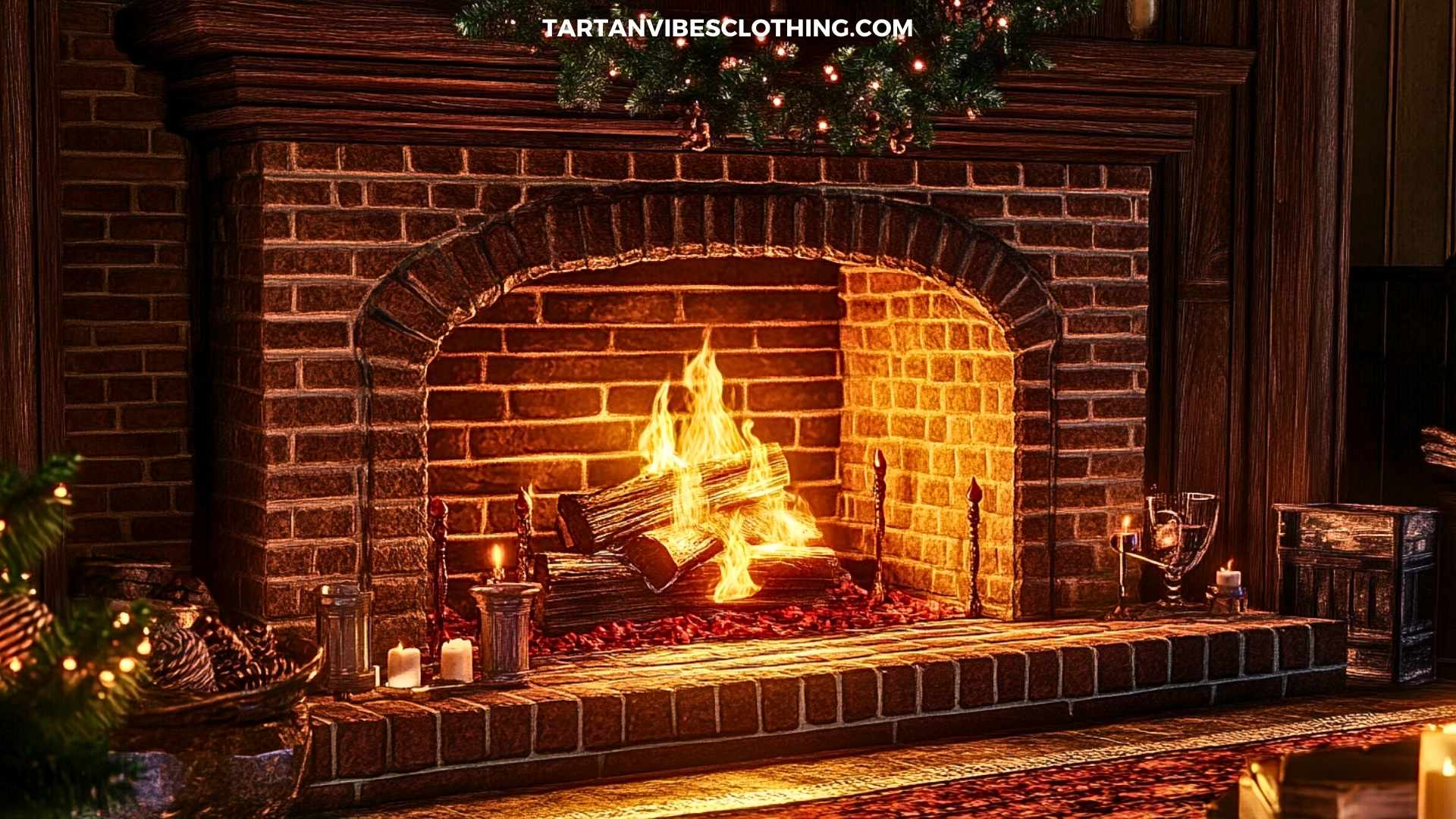
4. Decorating with Holly, Ivy, and Evergreens
Before modern Christmas decorations became widespread, holly, ivy, and other evergreens were used as seasonal greenery during winter. Their ability to remain green through the colder months made them a natural choice for midwinter decoration.
Today, Scottish homes may combine greenery with tartan ribbons, thistles, wreaths, and other Scottish motifs, blending older seasonal decoration with modern Scottish Christmas style.
5. Crom Dubh na Nollaig: Scottish Christmas Folklore

6. Christmas Church Services and Carol Singing
Christian worship is part of Christmas for many communities in Scotland today. Churches across Scotland may hold Christmas Eve services, Christmas Day worship, candlelit gatherings, nativity services, and carol singing.
These practices represent the Christian side of Christmas in Scotland today, while Scottish Gaelic hymns and local musical traditions can give celebrations a distinctly Scottish character in some communities.
Together, these customs reveal a Scottish festive heritage shaped by Yule, Christian observance, regional folklore, and generations of changing winter traditions.

Traditional Scottish Christmas Food and Drink
7. What Is a Traditional Christmas Dinner in Scotland?
A traditional Christmas dinner in Scotland today is generally similar to Christmas dinner elsewhere in the UK. Roast turkey is a common centerpiece, served with stuffing, roast potatoes, root vegetables, gravy, pigs in blankets, and other seasonal trimmings.
Scottish ingredients and family recipes can add a regional touch, and some households may serve alternatives such as roast beef or goose. Desserts and festive treats may also include Scottish favorites such as clootie dumpling, although menus vary between families and regions.

8. Mince Pies and Festive Baking
Mince pies are a familiar part of Christmas across Scotland and the rest of the UK. Modern versions are small pastries filled with sweet mincemeat—a mixture typically made from dried fruit, spices, sugar, and other ingredients rather than minced meat.
Alongside mince pies, Scottish families may enjoy traditional baking and desserts during the festive season. Clootie dumpling, a rich steamed pudding made with dried fruit and spices, is a Scottish dish that often appears at winter gatherings and special occasions.

9. Scottish Whisky at Christmas

10. What About Black Bun?
How Christmas Is Celebrated in Scotland Today
11. Ceilidhs, Music, and Christmas Gatherings
A ceilidh is a social gathering centered around traditional music and dancing, often featuring reels and jigs accompanied by fiddles, accordions, or other instruments. Ceilidhs are held throughout the year in Scotland and are also popular at Christmas parties and festive gatherings.
During the festive season, ceilidhs bring families, friends, and communities together through traditional music and dancing. They are especially popular around Christmas and Hogmanay, making them a lively part of Scotland’s wider winter celebrations.
12. Christmas Markets and Seasonal Events
During November and December, cities and towns across Scotland host Christmas markets, festive light displays, concerts, and seasonal events. Edinburgh and Glasgow are particularly well known for their large festive programs, while smaller communities host their own local markets and celebrations.
Christmas markets have become a popular part of Scotland’s modern festive season, combining seasonal food and drink, gifts, crafts, entertainment, and Scottish-made products. They also give visitors an accessible way to experience Scotland’s contemporary Christmas atmosphere.
Families can also enjoy a Christmas pantomime, or “panto”—a festive theatre show featuring comedy, music, colorful costumes, and audience participation.

13. Tartan and Scottish Christmas Decorations
Modern Scottish Christmas décor often incorporates tartan, thistles, Highland imagery, and other symbols of Scottish heritage. Tartan ribbons may be added to wreaths and Christmas trees, while tartan stockings, tree skirts, ornaments, and table decorations bring Scottish character into the home.


14. Gifts, Family, and a Modern Scottish Christmas
Like elsewhere in the UK, Christmas Day in Scotland is now largely centered on family gatherings, exchanging presents, festive meals, and spending time together. Gifts with a Scottish connection—such as tartan items, locally made crafts, Scottish food, or other heritage-inspired pieces—can add a personal cultural touch.
Modern Christmas in Scotland shares many traditions with the rest of Britain, while Scottish heritage, music, food, language, and local customs give the season its distinctive character.

Christmas vs Hogmanay: What's the Difference?
Christmas and Hogmanay are separate celebrations in Scotland. Christmas is celebrated on December 25 and centers on family, gifts, festive meals, and Christian traditions, while Hogmanay is the Scottish celebration of New Year's Eve on December 31. The two are often grouped because Scotland's historic suppression of Christmas made the New Year especially important.
Christmas |
Hogmanay |
|
When? |
December 25 |
December 31–January 1 |
Main focus |
Christmas Day, family, gifts, festive meals |
Welcoming the New Year |
Common customs |
Christmas dinner, decorations, church services, gifts |
First-footing, New Year gatherings, symbolic gifts |
Traditional foods & drinks |
Christmas dinner, mince pies, festive baking |
Black bun, whisky and other New Year fare |
Historical significance |
Suppressed for centuries after the Scottish Reformation |
Became Scotland's especially prominent winter celebration |
First-Footing: A Hogmanay Tradition, Not a Christmas Custom
First-footing is one of Scotland's best-known Hogmanay traditions. After midnight on New Year's Eve, the first person to enter a home is known as the first-footer, and their arrival is traditionally associated with the household's luck for the coming year.
A first-footer may bring symbolic gifts such as coal, shortbread, black bun, or whisky, representing wishes such as warmth, food, hospitality, and prosperity.

Why Did Hogmanay Become So Important in Scotland?
Centuries of reduced Christmas observance helped give New Year celebrations an unusually prominent place in Scottish festive culture. Even after Christmas returned to public life, Hogmanay retained its distinctive importance in Scotland.
Conclusion
Scottish Christmas traditions reflect a festive history shaped by Yule customs, religious change, regional folklore, and modern celebrations. From Yule bread and rowan traditions to ceilidhs, tartan decorations, festive food, and family gatherings, Christmas in Scotland brings together old and new in distinctly Scottish ways.
Whether you celebrate with Scottish food, music, tartan, or a cheerful “Nollaig Chridheil”, these traditions offer meaningful ways to bring a little Scottish heritage into Christmas.
Frequently Asked Questions
Do Scots Still Celebrate Yule?
Most people in Scotland today celebrate Christmas rather than Yule as a separate festival. However, Yule remains part of Scotland’s cultural and linguistic heritage, especially in Scots vocabulary and historical accounts of midwinter customs. Some older Yule traditions are also remembered through folklore, heritage events, and modern interest in Scotland’s seasonal past.
Do Scottish Christmas Traditions Vary by Region?
Yes. Scottish Christmas traditions historically varied between regions, islands, and local communities, particularly where Gaelic culture and local folklore remained strong. Some customs were widespread, while others were highly regional. Crom Dubh na Nollaig, for example, is associated with the Isle of Islay, showing how individual communities developed their own festive stories and beliefs.
What Are Traditional Scottish Christmas Gifts?
Traditional or Scottish-inspired Christmas gifts often reflect the country’s tartan, craftsmanship, food, and cultural heritage. Popular choices include tartan accessories, knitwear, Scottish-made crafts, shortbread, and personalized clan or family gifts. Today, ornaments, stockings, and other items featuring a recipient’s tartan are also popular ways to add a personal Scottish connection.
What Is Santa Claus Called in Scotland?
In Scotland, Santa Claus is commonly called Santa or Father Christmas, as in the rest of the UK.

Teresa Finn
As someone with a deep passion for clan heritage, especially the intriguing world of tartans and their rich traditions, I'm here to be your companion on this exciting journey. Together, we'll delve into the depths of clan history, uncovering the stories behind these vibrant tartans and making every connection to your heritage more meaningful.


